
Addressing the Divide

Join us to bridge the divide through critical thinking, civic participation, active and empathetic listening, civil discourse, and consideration of shared experiences.
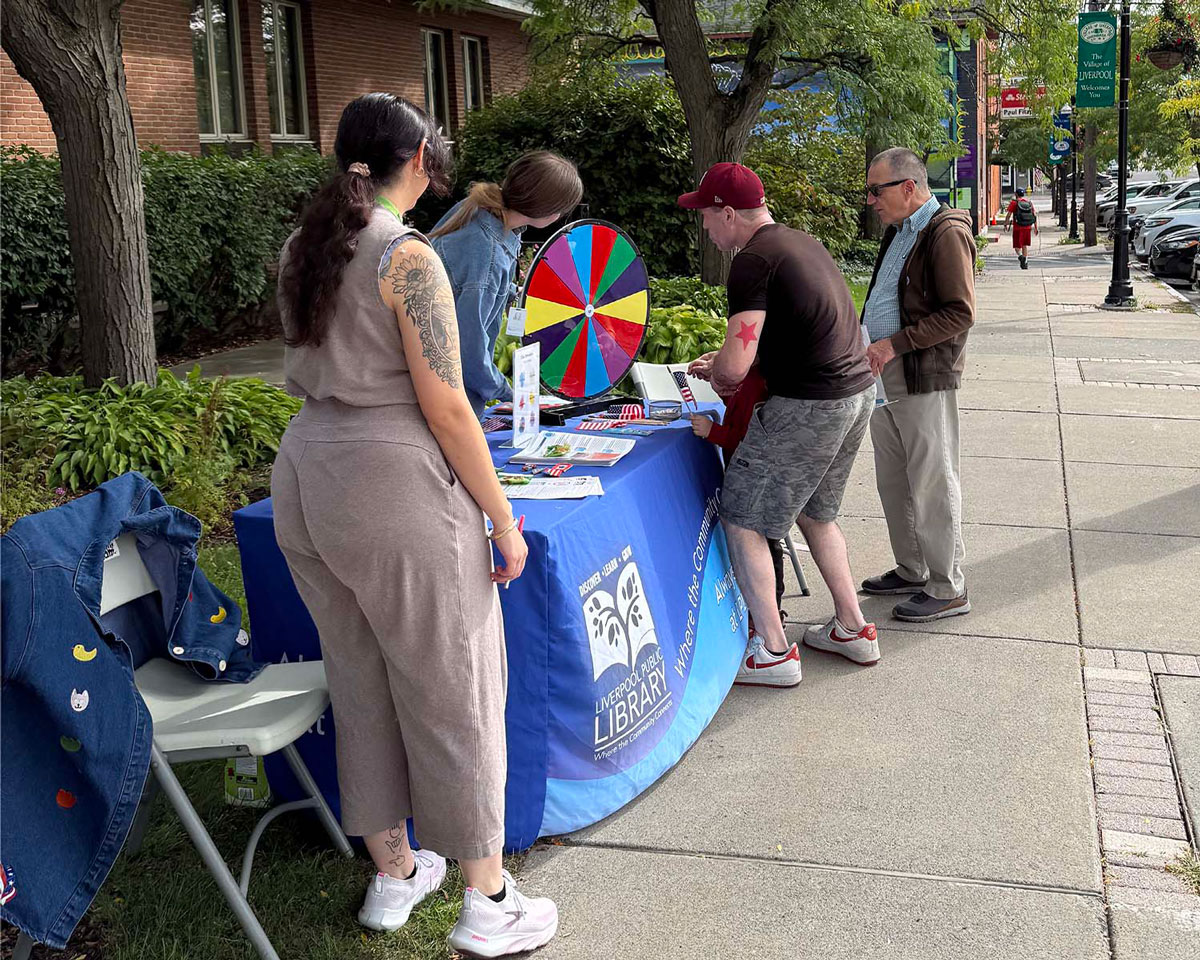
Library members tabling on sidewalk for the Addressing the Divide event

Welcome

For the last four months of 2026, our civics topic will be “Addressing the Divide”.  We’ll investigate manifestations of divisiveness, including book bans, gerrymandering, and media influence.  We’ll identify the forces that got us here by discussing the history of political polarization, the impact of money on elections, fear and misconceptions of political ideologies, and the role of both media and AI. Finally, we’ll talk about ways to bridge the divide through critical thinking, civic participation, active and empathetic listening, civil discourse, and consideration of shared experiences.

While things seem very polarized, there are common ground and some significant similarities in what a majority of people in America desire, such as:

  • Fair, transparent, and effective election processes that yield trustworthy results
  • Media outlets that report news honestly
  • Courts that hold all people accountable regardless of money, power, or influence
  • Laws that apply to everyone equally regardless of demographic, race, wealth, or power
  • Responsible and common-sense approaches to energy, sustainability, and the environment [1, 2, 3, 4]

Civil discourse, sharing ideas, understanding, learning, and growing all demand that we appreciate and respect our differences (see Harvard University Pluralism Project). We hope this content, in conjunction with programs being offered at the library, provides new perspectives and approaches for thinking about and discussing today’s political environment.

Sources:

[1] – The Brookings Institution: “The civic consensus beneath America’s political divide”

[2] – Americans Agree: “Lessons from a Year of Exploring Common Ground”

[3] – Gallup: “Americans Show Consensus on Many Democracy-Related Matters”

[4] – Harvard Kennedy School: Carr-Ryan Center For Human Rights: “National Survey Finds Bipartisan Support for Expansive View of Rights”

Explore Addressing the Divide

In this section, you will find materials, programs, terms, and resources for further exploration of our topic “Addressing the Divide”.

Upcoming Events

  • Pop Up Civics: Addressing the Divide

    1:00pm - 3:00pm, Tue Nov 10th 2026
  • Between the Lines: AI Literacy Book Club

    6:30pm - 8:00pm, Tue Nov 10th 2026
  • Humanities Unbound: Reading and Discussion for Public Life

    6:00pm - 8:00pm, Wed Nov 18th 2026
  • Civics Tonight! Voices Around the Table

    7:00pm - 8:30pm, Thu Nov 19th 2026
  • Civic Saturdays: Addressing the Divide

    10:00am - 12:00pm, Sat Nov 21st 2026

Civil Discourse

This section defines terms and concepts that can contribute to divisiveness and provides context to help better understand how division can develop.

Pluralism is defined by Cambridge Dictionary as “the existence of different types of people, who have different beliefs and opinions, within the same society” [1]. Harvard University’s Pluralism Project focuses on defining pluralism as a four-part strategy for understanding and appreciating diverse ideologies:

  • Energetically engaging with diversity and diverse ideas
  • Actively seeking understanding across lines of difference
  • Retaining our own identities while recognizing, and respecting, the differences with others’
  • Using dialogue and civil discourse to appreciate our own, and others’, beliefs [2]

These core concepts offer an ideal roadmap for the civil discourse Liverpool Public Library is trying to encourage and promote. This perspective highlights how different belief systems and identities can and should operate together.

Sources:

[1] – Cambridge Dictionary: “Pluralism”

[2] – Harvard University Pluralism Project

In Jill Lepore’s 2019 book This America: The Case for the Nation, she examines definitions and examples of “Nationalism” as originally developing through “liberal” ideals (see definition of Liberalism below) with demands of representation and inclusion, but states that American nationalism is both unique compared to other global examples [Lepore, This America. p 21], and evolved away from liberal ideals to its more current form alongside troubling global shifts, adopting populism, xenophobia, and eventually jingoism.

Lepore notes that current expressions of nationalism are often exclusive and deeply prejudiced, pointing to rejections of people based on ethnic and racial grounds, as well as the adoption of specific and restrictive narratives of who an “American” is and what an “American” must believe.

Lepore argues that patriotism is built on the desire to make this country better, the belief that we, as Americans, can find legal and reasonable solutions that benefit everyone, and the conviction that America is worth fighting for [pp 22-23].

Source: Lepore, Jill. This america: The case for the nation. New York: Liveright Publishing Corporation, 2019.

Liberalism is an Enlightenment-era idea that can be concisely summed up as “a political and moral philosophy that treats the freedom of the individual as the central concern of politics” [1].

According to the Annenberg Classroom, liberalism has a few core tenets:

  • Primacy of the individual over the state
  • Equality of each and every human
  • Equal possession of inalienable rights for each human
  • Society and government that function to protect the equality and equal rights of each human
  • Tolerance and appreciation for differences among humans
  • Intolerance only for intolerance [2]

Globally, supporters of liberalism scaled these concepts to emphasize “the role of international institutions, cooperation, and interdependence in shaping state behavior”, and they “believe that states can work together to achieve common goals and address global challenges” [3].

Sources:

[1] https://polsci.institute/political-theory/defining-liberalism-historical-dynamic-concept/

[2] https://www.annenbergclassroom.org/resource/understanding-democracy-hip-pocket-guide/liberalism/

[3] – https://www.ciris.info/learningcenter/liberalism/

Contrary to the centuries-old definition of “liberalism” above, illiberalism is a term coined in 1997 by Fareed Zakaria in the Foreign Affairs journal article, “The Rise of Illiberal Democracy” [1]. Britannica defines illiberalism as: “not allowing people to think and act as they choose” [2]. Vitally, illiberal actions can be taken by any political party and manifest in some of these ways:

  • Suppression of free speech
  • Intolerance to other beliefs
  • Unequal treatment of people
  • Exclusion of people from equal representation, including voter suppression
  • Primacy of one branch of the U.S. government over the other two
  • Concentration of power (e.g., forms of authoritarianism, communism, fascism) over people [3]

Sources:

[1] – KAUTH, JASPER THEODOR, and DESMOND KING. “Illiberalism.” European Journal of Sociology / Archives Européennes de Sociologie / Europäisches Archiv Für Soziologie, vol. 61, no. 3, 2020, pp. 365–405. JSTOR, https://www.jstor.org/stable/27345633. Accessed 16 Sept. 2026.

[2] – Britannica: “Illiberalism”

[3] – The Rise of Illiberalism, by Thomas J. Main

See also:

https://www.journalofdemocracy.org/articles/illiberal-democracy-and-the-struggle-on-the-right/

https://politicsrights.com/why-illiberalism-explains-changes-social-order/

https://www.illiberalism.org/definition-of-illiberalism/

https://www.brookings.edu/books/the-rise-of-illiberalism/

Throughout time, factors influencing perception and polarization have changed and global illiberal movements have arisen and solidified in various ways, but some of the most successful—and dangerous—drivers of illiberalism include:

  • Dark money: The use of money to sway politics, elections, the media, courts of law, technology, and other levers of democracy and components of power, to create circumstances that benefit a small group of wealthy people. The effects of large donations in U.S. elections have increased since the 2010 Citizens United v. FEC Supreme Court case [1, 2, 3, 4].

Sources:

[1] – OpenSecrets: “Dark Money Basics”

[2] – Brennan Center for Justice: Citizens United, Explained

[3] – Brennan Center for Justice: Dark Money Hit a Record High of $1.9 Billion in 2024 Federal Races

[4] – Statista: Q1 Lobbying Spending Hits Highest Level Since 2010

  • Manufactured doubt: The use of dark money in media can lead further to “manufactured doubt”, or a campaign that seeks to use misinformation/disinformation and emotional arguments that make a person think research and facts may be incorrect.
  • Echo Chamber Effect: a phenomenon in which an individual’s beliefs and views are reinforced by exposure to information that aligns with their preexisting opinions [1]. This occurs because firstly, humans inherently have confirmation biases, which means they naturally “seek out information that supports the views they already hold” [2], and this makes people more skeptical of, and less likely to accept, other information. Secondly, 24-hour news programming reliant on views alongside policy retreat from media regulation [3] have both allowed and forced news stations to cater to their viewers’ perspectives, which has decreased contradictory narratives. These echo chambers have been amplified by social media networks operating with algorithms that deliberately display content viewers have already shown an interest in.

Sources:

[1] – EBSCO: Echo Chamber Effect

[2] – University of Texas at Austin, McCombs School of Business – Ethics Unwrapped: Confirmation Bias

[3] – Columbia Undergraduate Law Review: Deregulation Nation: The Cost of Ignoring the Courts on Regulating Media Broadcasting

  • Artificial Intelligence (AI): According to the Stanford Institute for Human-Centered AI (HAI), “Artificial Intelligence” or “AI” is “a broad term for computer systems that can perform tasks with human-like intelligence, such as understanding language, recognizing images, learning from data, reasoning, and making decisions” [1]. AI relies on machine learning, which uses “algorithms that can ‘learn’ the patterns of training data and, subsequently, make accurate inferences about new data [original source’s emphasis] [2].AI has exploded into people’s lives at an unprecedented pace. Investment into AI technology, from processing chips to data centers, has skyrocketed, and AI use is slowly increasing [3, 4]. Among many concerns about this burgeoning technology is the veracity and accuracy of the information AI provides as it sometimes hallucinates and often affirms users’ prompts and opinions, even if they are incorrect or unhealthy. This technology has the potential to be beneficial but also threatens to compound information siloing and echo chambers, and deepen the divide.

Sources:

[1] – Stanford Institute for Human-Centered AI (HAI): “What is Artificial Intelligence (AI)?”

[2] – IBM: “What is Machine Learning?”

[3] – The Fed: “Monitoring AI Adoption in the US Economy”

[4] – Statista: “Where Americans Seek Support From AI”

Supporting Materials

Databases

Each resource listed below provides slightly different perspectives on polarization and the political divide and can be downloaded, printed, translated, spoken aloud with built-in TTS accessibility features, and cited in several popular bibliographic styles.

Britannica Academic Edition
Use Britannica to search and find authoritative definitions and extended resources on political or divisive topics like “partisanship”, “political party”, or “voter suppression”. Each article links to related topics to get context. When available, the article will also link to images and videos to further develop the topic.

CultureGrams
CultureGrams specializes in providing culturally significant information about each country and region in the world. The results often incorporate videos, images, and sound recordings that create a thorough overview of the country. Use this database to explore the United States of America for a fascinating view of the government, economy, population, and more, and this resource is terrific for comparing features of countries. (Available to LPL patrons only.)

Gale Communications and Mass Media
This database provides access to carefully curated resources, and a search of “political polarization” (for example) yields hundreds of magazines and academic journal articles, as well as news resources, and the results can be easily and effectively sorted to best satisfy your search.

Gale Diversity Studies
This database provides over a hundred results for a search of “political polarization”, plus hundreds of academic journal articles, and many news articles that directly related to American and global diversity studies. The results can be narrowed using Gale’s helpful filters.

Gale U.S. History
Searching “political polarization” in Gale’s U.S. History database surfaces magazine articles, academic journals, books, and news articles that explore the divide in American History. The results can be sorted quickly using Gale’s interface.

Opposing Viewpoints In Context
Gale’s Opposing Viewpoints provides research guides to explore difficult topics, balancing different sides with supporting documents. A search of “political polarization” in this database returns infographics, images, academic journals, hundreds of magazine articles, over a thousand news articles, and more results. This resource is great for starting and completing research. The information provided is thoughtfully categorized and can be filtered and sorted using Gale’s helpful tools.

By the Numbers

Thomas Jefferson wrote that “wherever the people are well informed they can be trusted with their own government” [Library of Congress: Thomas Jefferson to Richard Price, Paris Jan. 8. 1789], and a healthy democracy is reliant upon an informed citizenship. Explore the links listed below to see statistical representation on a variety of issues related to Democracy in the United States.

There are several resources that track and measure the health of a democracy. This section provides a democracy monitor and an article that quantifies Americans’ sentiments about our democracy. The tracking service has transparent methodology and shows steady movement away from liberalist democracy towards authoritarianism, both in the United States and globally, and Americans’ opinions mirrors this sentiment showing strong dissatisfaction.

  • Agile Explorations: Democracy Monitor
    Agile Explorations’ Democracy Monitor uses public records published regularly by the U.S. Government then categorizes and grades them based on democratic norms and standards. Each category and grade contains links to the primary documents, and to abide to transparency, the methodology is published and supported by the Democracy Monitor Charter.
  • Statista: Americans Largely Dissatisfied with the State of Democracy
    Statista publishes charts, graphs, and infographics that visualize poignant data in common sense ways. The results on this site often include global data but are helpful for contextualizing trends at a high level. This resource shows satisfaction rates of people in different countries, including America, and cites its sources while linking to related infographics.

These resources provide some context about how Americans perceive the media and access and digest information. They simultaneously demonstrate a narrowing of perspectives as conglomerates have been consolidated from roughly 50 owners in 1983 to 5 in 2025, alongside growing distrust in traditional sources and a broader movement towards social media and unconventional news sources.

  • Gallup: “Trust in Media at New Low of 28% in U.S.”
    This Gallup report combines concise summaries with multi-year, interactive charts that dissect trust in media through lenses including political affiliation and age. Each chart has a link to the raw data. The article is tagged (at the bottom) so viewers can readily find related articles.
  • Harvard University: The Future of Media Project: “US Media Ownership”
    This site was developed by The Institute of Quantitative Social Science, hosted by Harvard University, and it highlights the few media conglomerates that run all news media in the United States and explores monetary donations and media trends. The page links to the official data as a PDF.
  • Who Owns the News: A Complete Map of US Media Ownership, Before and After the Oligarchs
    This thoroughly cited article shows the current media ownership landscape and how it has changed from roughly 50 owners in 1983 to 5 in 2025. The article concludes with a table showing political leanings of each conglomerate and links to related articles and news sources.
  • YouGov: “Trust in Media 2026: Which news sources Americans use and trust”
    YouGov regularly polls Americans on various topics and has become an accurate and trusted source of public sentiments. This article brings together years of data of trustworthiness. It explains its methodology, and each interactive chart includes a link to the raw data. There are related articles listed at the bottom of the article.

This section highlights organizations that help bridge the divide in various ways through independent reporting to information literacy and pathways to become informed and participate in civic life.

  • Central Current
    This local independent news resource provides deep-dives into pertinent topics.
  • CNY Solidarity Coalition: Directory of Local Organizations
    This site provides a directory of services and organizations, conveniently categorized and sorted by topics of interest, and is a great starting point for getting involved with local organizations.
  • Literacy Coalition of Onondaga County
    This organization is committed to developing literacy skills for children and adults. This is a great way to get involved and help in your community. Developing strong literacy skills is essential for full participation in civic conversations, as it empowers individuals to make informed choices in a democratic society.

Learn More

This section provides thorough, authoritative online tools to help better understand information and media literacy, stay current on trends about technology, and combat misinformation.

  • Brennan Center for Justice: Money in the 2026 Election
    The Money in the 2026 Election series published regularly by the Brennan Center for Justice is a one-stop-shop for tracking and understanding dark money in the 2026 midterm elections. This page includes expert analyses and ongoing summaries, each with links to primary sources and pertinent topics. In a related report, the Brennan Center for Justice notes that, “a handful of wealthy donors dominate electoral giving and spending in the United States”, and this is systematically “drowning out the voices of ordinary Americans” [Brennan Center for Justice: Influence of Big Money]
  • Statista: Q1 Lobbying Spending Hits Highest Level Since 2010
    This chart provides a multi-year look at dark money spent annually since 2008. The trends indicate that the entirety of 2025 and Q1 of 2026 witnessed billions of dollars of lobbying dollars spent on elections.

Book challenges are an indirect measure of the freedom of speech, personal rights, and the First Amendment in this country. Book bans are not new (see the Harvard Graduate School of Education – Gutman Library: “Banned Books” and PEN America’s “Manuscripts Don’t Burn: a Timeline of Literary Censorship, Destruction, and Liberation”), but challenges are on the increase and have received a good deal of media coverage recently with coverage revealing the divisiveness of this issue. The resources below present information and statistics on recent book challenges.

  • American Library Association: “Censorship by the Numbers: Banned Books Data”
    Every year, the American Library Association (ALA) releases and provides insights about the previous year’s statistics about book challenges. This resource shows specific items that were challenged, in what state they were challenged most, and by whom. You can download the full report and get links to other resources.
  • PEN America: Book Bans
    This page of PEN America aggregates news stories about book bans, including recent lawsuits and legislation, book ban lists, research, and ways to take action against book bans.
Addressing the divide requires civil discourse, empathy, and introspection, but bots now outnumber humans online, which means it is hard to tell if there’s even a real person responding to your comments. You may be unknowingly reacting to intentionally divisive content. The following resources help paint a picture about how technology, while sometimes beneficial, is also sometimes used to manufacture doubt and sow misinformation.

Bots/Botnets

These resources provide deep-dives into AI education; the landscape is changing quickly and will have benefits and consequences in many fields.

These resources utilize vast networks and multiple points of corroboration to provide context to stories, debunk misinformation, and combat illiberalism.

The following resources provide lessons and exercises for teaching and learning about media literacy.

Youth and Family Services

In this section, we provide engaging programs, materials, and online content for youth and families to consider and “Address the Divide” together. Civic engagement at a young age benefits families and youth by creating “higher life satisfaction, civic participation, and educational attainment, and is related to lower rates of arrest in emerging adulthood” [1] while creating positive habits that can last a lifetime and increasing mental well-being [2], but it also benefits the communities by increasing social connections, establishing supportive networks, and empowering young people, who are the ultimate stakeholders of legislative and policy decisions made today [3].

Sources:

[1] – Journal of Youth and Adolescence: “Adolescent Civic Engagement and Adult Outcomes: An Examination among Urban Racial Minorities”

[2] – Journal of Youth and Adolescence: “Interventions to Promote Civic Engagement Among Youth and Its Outcomes on Mental Health: A Scoping Review”

[3] – Tufts University: Center for Information & Research on Civic Learning and Engagement: “Why Is Youth Civic Engagement Important?”

Upcoming Events

  • Pop Up Civics: Addressing the Divide

    1:00pm - 3:00pm, Tue Nov 10th 2026
  • Between the Lines: AI Literacy Book Club

    6:30pm - 8:00pm, Tue Nov 10th 2026
  • Humanities Unbound: Reading and Discussion for Public Life

    6:00pm - 8:00pm, Wed Nov 18th 2026
  • Civics Tonight! Voices Around the Table

    7:00pm - 8:30pm, Thu Nov 19th 2026
  • Civic Saturdays: Addressing the Divide

    10:00am - 12:00pm, Sat Nov 21st 2026

Supporting Materials